I talked with Tyler at Sherman Wildcats yesterday and I was really impressed with his business model – he’s filling niches a lot of wildcatters ignore. I’ve had a fair number of customers asking about Sherman rounds, so this was great timing.
I’m not usually a fan of wildcats because most don’t have factory head-stamped brass – but what’s neat about Sherman is that it does. Most of their brass is fire-formed, too. We’ll probably start buying reamers for these as customers request them.
The round that caught my eye is the 25 Sherman SST
– essentially a shortened 7mm SAUM with a 30° shoulder and more case capacity than a 6.5 PRC.
Rumor has it it’ll launch a 135-gr Berger Hybrid at 3000 fps even from a short 20″ barrel. With a .650 bc it should make an outstanding long-range deer and coyote rifle.
Go check them out: Sherman Wildcat Cartridges (and their Facebook group).
If you spend enough time around hunters or riflemen, one question always comes up:
“If you could only have four centerfire rifle cartridges for the rest of your life, what would they be?”
It’s a strange question for a guy like me-someone who owns 40+ different reamers to support my customers. I get asked for opinions on rifles, calibers, and cartridges almost daily. So why condense all that variety down to just four?
Two reasons:
It’s a fun mental exercise. Custom rifles are expensive. So are optics, thermals, and all the gear that goes with them. Personally, I’d rather own four perfectly built custom rifles than 40 factory rifles gathering dust. Here are my four choices-starting small and working up.
1 – .204 Ruger
I bet this one surprised some of you. The .204 Ruger is an awesome little round that does a lot more than people give it credit for. It shoots extremely flat, works flawlessly in both AR-15s and bolt guns, has no recoil, and the light bullets tend not to ricochet.
It’s small enough for prairie dogs, yet plenty for raccoons and other tough varmints. In my opinion, it’s one of the most underrated all-around varmint cartridges out there.
2 – 22 Creedmoor
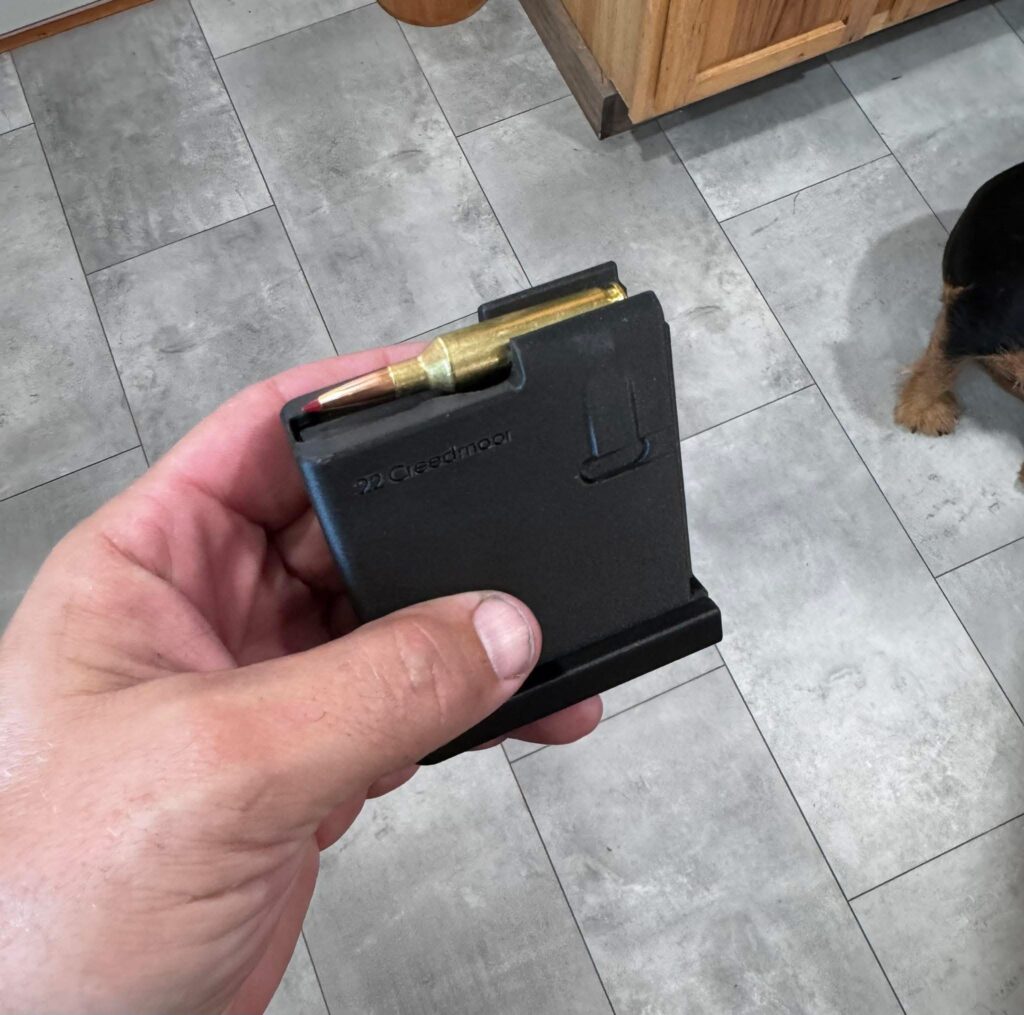
No surprise here. The 22 Creedmoor is a coyote hammer at just about any range most shooters can realistically hit them. It has minimal recoil, very little wind dritt, and excellent bullet options with high-quality brass for reloaders.
It’s also legal for night hunting in most states (since it’s still a .22 caliber), which isn’t always the case with the 6mms. And truth be told, inside 300 yards, it’ll do everything a 6mm can do on a deer.
3 – 6.5 PRC
This was the hardest slot to fill. I needed a cartridge that could stretch past 500 yards on deer and antelope, maybe even elk if the conditions were right. It also needed to be mild enough for long-range practice or late-season coyote calling when they hang up at 500-800 yards. After looking at ballistics, recoil, and bullet selection, my choice is the 6.5 PRC.
I’ve shot the 6.5 Creedmoor for over a decade with excellent results. The only thing I wished for was just a bit more impact velocity at extended ranges-without moving up to a long action. The 6.5 PRC checks every box, with great brass options (including Lapua) and endless bullet choices.
4 – .33 Nosler
When it comes to the “big gun” slot, I skipped over the 7mms and 30s and went straight to the .338s. For me the .33 Nosler is the winner.
I’m not a fan of belted magnums, so the .338 Win Mag was out. The .338 Lapua and .338 RUM are excellent but long and less efficient in terms of magazine fit with high-BC bullets. The .33 Nosler offers the power needed for anything-from big bears to long-range elk or moose-without unnecessary compromises. This is the cartridge I’d want in my hands when I need maximum authority on target.
Final Thoughts
Obviously, this is subjective. Everyone’s list will look a little different depending on what and where they hunt. But as of right now, if I had to narrow down my rifle battery to just four cartridges that cover every situation in the U.S., these would be my choices: .204 Ruger – varmints and small predators 22 Creedmoor – coyotes, light deer work, night hunting 6.5 PRC – deer, antelope, extended-range general purpose .33 Nosler – elk, moose, bear, and “anchor it now” hunting That’s my take.
What about you? If you had to pick just four, what would make your list?
I get a lot of questions about choosing bullets for coyotes in our most popular chambering, the .22 Creedmoor, so I thought I’d share what’s been working well for me and many of my customers.
My take up front: Coyotes are predators, not small varmints like prairie dogs or groundhogs. They need bullets that carry enough energy to transfer effectively for quick, clean kills. I start with bullets around 70 grains or heavier, sometimes a bit lighter if they’re designed tough enough. Lightweight bullets, like those below 70 grains built for varmints, often lack the energy and toughness needed for coyotes.
My go-to choices are the 80-grain Hornady ELD-X, 80-grain ELD-M, 70-80 grain Berger VLDs, and the 69-grain Sierra Tipped MatchKing. These bullets have tougher jackets that hold together and deliver high energy transfer, which is key for coyotes. On marginal hits, like the shoulder or hips, their sturdy construction lets them punch through bone if needed, ensuring the energy gets where it counts for a solid kill. Most of the big-number coyote guys I talk to swear by the 70-grain and 80-grain Berger VLDs for their accuracy and performance on predators, and I can see why-they’r a favorite for a reason.
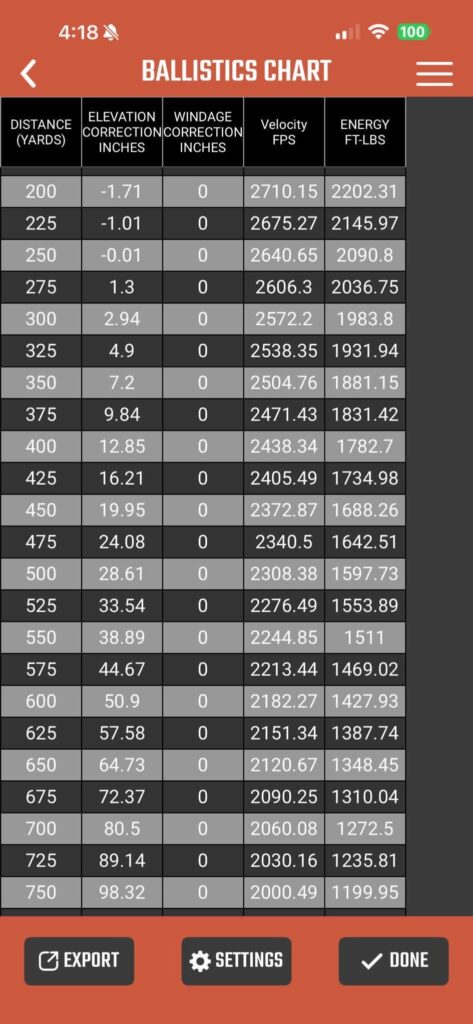
To show the difference between heavier and lighter bullets, 1 compared an 80-grain Hornady ELD-X at 3300 fps to a 53-grain Hornady V-MAX at 4000 fps, a typical lightweight varmint bullet, both sighted in at 250 yards with a 2.75-inch scope height. Here’s how their bullet drop and retained energy stack up from 300 to 1000 yards:
Inside 250 yards, most bullets will work for coyotes if they stay together. Lightweight bullets like the V-MAX are a bit flatter, but past 300 yards, heavier bullets like the 80-grain ELD-X pull ahead. Its drop is close to the V-MAX, but it carries way more energy, which transfers better to the coyote for quicker kills. It also drifts less in a 10 mph crosswind (~62.0″ vs. ~85.0″ at 1000 yards), which helps in open country.
The 80-grain ELD-X is a great example, but the others perform just as well. The 80-grain ELD-M has similar energy retention and a tough jacket, transferring plenty of energy and punching through bone on tough shots like the shoulder or hips. The 70-80 grain Berger VLDs, as those high-volume coyote hunters often rave about, are super accurate with high ballistic coefficients, with strong jackets that hold up to bone impacts, delivering energy deep into the animal. The 69-grain Tipped MatchKing, though a bit lighter, has a robust design that transfers energy well and can penetrate bone when needed, balancing speed and toughness. Heavier bullets like these are my choice for coyotes in a .22 Creedmoor. Their higher energy transfer and tougher jackets make them ideal for predators, especially on marginal hits where they can get through bone to deliver the energy needed for a clean kill.
Lightweight varmint bullets, like the 53-grain V-MAX and others below 70 grains, are great for smaller critters like prairie dogs, but their construction isn’t built for coyotes.
What bullets are you using for coyotes in your .22 Creedmoor? I’d love to hear what’s working for you